The Healing Power of Grounding: Reconnecting With Your Body, the Earth, and the Present Moment


There are moments when life can feel like too much.
Your thoughts move quickly.
Your body feels tense.
Your emotions feel overwhelming.
You may find yourself thinking about what happened yesterday or worrying about what might happen tomorrow.
And suddenly, you realize that you are physically present—but mentally somewhere else.
This is where grounding can become a powerful practice.
Grounding is the process of intentionally reconnecting with your body, your surroundings, and the present moment.
It is a reminder that you do not have to solve everything at once.
Sometimes, you simply need to come back to right now.
What Does It Mean to Be Grounded?
Being grounded does not mean that you never experience anxiety, sadness, anger, or stress.
It means developing the ability to notice what is happening within you without becoming completely consumed by it.
Grounding can help you:
Become more aware of your body
Focus on the present moment
Create space between emotions and reactions
Reduce feelings of overwhelm
Reconnect with your surroundings
Feel more centered during stressful moments
Grounding is not about forcing yourself to "calm down."
It is about creating enough awareness and safety to be present with what you are experiencing.
Why We Sometimes Feel Disconnected From Our Bodies
Stress can pull our attention away from the present.
When the nervous system perceives danger or overwhelming stress, our attention naturally becomes focused on protection.
We may become hyperaware of potential problems.
We may overthink.
We may disconnect from uncomfortable emotions.
We may stay constantly busy so we don't have to feel.
This is one reason grounding can be particularly helpful.
Instead of asking the mind to stop thinking, grounding gently gives the mind somewhere else to go.
Back to the body.
Back to the breath.
Back to the room.
Back to the earth.
Back to this moment.
The Nervous System and Grounding
The nervous system is constantly taking in information about the environment.
It notices sounds, movement, temperature, facial expressions, touch, and other signals that help the body determine whether a situation feels safe or threatening.
Grounding practices provide the nervous system with present-moment sensory information.
For example:
Feeling your feet against the floor
Listening to the sounds around you
Feeling the warmth of sunlight
Holding a warm cup of tea
Noticing your breathing
Looking around and naming what you see
These practices can help shift your attention away from mental spirals and toward what is actually happening in the present.
Grounding does not erase difficult emotions.
It helps create space to experience them without becoming completely overwhelmed.
Grounding Through the Five Senses
One of the simplest grounding practices is to reconnect with your senses.
Sight
Look around your environment.
Notice the colors, shapes, textures, and light.
You might quietly name five things you can see.
Sound
Listen carefully.
What sounds are closest?
What sounds are farther away?
Can you hear birds, wind, water, or the sounds of everyday life?
Touch
Notice what your body is touching.
Feel your feet against the ground.
Touch the fabric of your clothing.
Hold something warm or cool.
Smell
Notice the scents around you.
Fresh air.
Flowers.
Herbs.
Essential oils.
A cup of tea.
Allow yourself to experience the scent without rushing past it.
Taste
Slow down while eating or drinking.
Notice the flavor, temperature, and texture.
Even something as simple as drinking water can become a grounding ritual when you are fully present.
Grounding Through Nature
There is something deeply restorative about reconnecting with the natural world.
Nature gives us an opportunity to step away from constant stimulation.
Try:
Walking through the trees
Sitting beside water
Gardening
Watching the sunrise
Feeling grass beneath your feet
Sitting quietly beneath a tree
You do not have to turn the experience into a complicated spiritual practice.
Simply being present is enough.
Notice the earth beneath you.
Notice the sky above you.
Notice the rhythm of nature.
There is wisdom in remembering that you are part of something larger than your daily responsibilities.
The Spiritual Meaning of Grounding
Grounding has a beautiful spiritual dimension.
Across many cultures, the earth has been viewed as a source of nourishment, connection, wisdom, and renewal.
Spiritually, grounding can represent:
Returning to yourself
Connecting with the earth
Releasing what no longer serves you
Creating stability
Remembering your roots
Becoming present
When life feels chaotic, grounding can become a ritual of returning.
Returning to your body.
Returning to your breath.
Returning to your values.
Returning to the present.
A Simple Grounding Ritual
You can create a grounding ritual whenever you feel emotionally overwhelmed.
Step 1: Pause
Stop whatever you are doing, if possible.
Take a moment before reacting.
Step 2: Feel Your Feet
Place both feet firmly on the ground.
Notice the support beneath you.
Step 3: Breathe
Take a slow, comfortable breath.
There is no need to force a deep breath.
Simply notice the breath moving in and out.
Step 4: Look Around
Name:
Three things you see
Two things you hear
One physical sensation you notice
Step 5: Remind Yourself
Say quietly:
"I am here."
"I am present."
"I can take this one moment at a time."
You don't have to feel completely calm.
You simply have to become a little more present.
Grounding Is Not About Avoiding Your Emotions
It is important to remember that grounding should not become another way of avoiding difficult feelings.
The goal isn't:
"I need to stop feeling this."
Instead:
"I can feel this and remain connected to myself."
There is a profound difference.
Healing does not require us to eliminate emotions.
It teaches us how to experience emotions with greater awareness, compassion, and support.
Sometimes the most powerful thing you can say to yourself is:
"This feeling is here, and I can be here with it."
Creating Grounding Rituals in Everyday Life
Grounding does not have to happen only when you are overwhelmed.
You can incorporate it into your everyday life.
Try:
🌿 Drinking your morning tea without your phone.
🌿 Taking a slow walk outside.
🌿 Sitting in sunlight for a few minutes.
🌿 Journaling before bed.
🌿 Practicing prayer or meditation.
🌿 Listening to calming music.
🌿 Spending time with plants.
🌿 Taking a mindful shower.
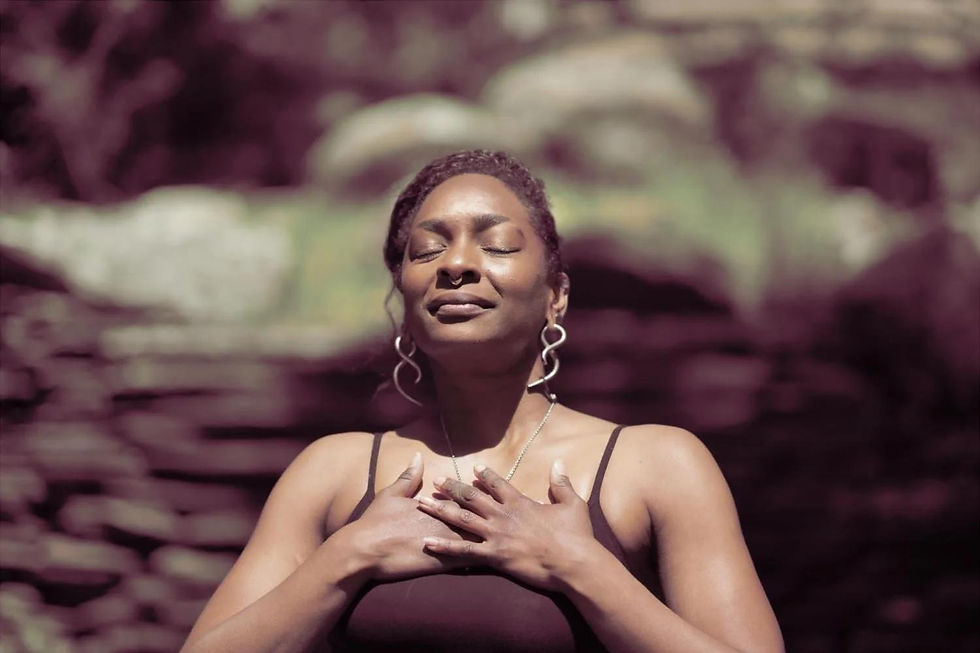
🌿 Placing your hand over your heart and noticing your breath.
Small moments of presence can become powerful rituals over time.
You Are Allowed to Come Back to Yourself
Life will pull you in many directions.
There will always be responsibilities.
There will always be uncertainty.
There will always be something waiting for your attention.
But you can learn to return.
Return to your breath.
Return to your body.
Return to the earth.
Return to the present.
Return to yourself.
Grounding is not about escaping life.
It is about becoming present enough to actually experience it.
A Closing Reflection
Take a moment today to notice where you are.
Feel your feet.
Notice your breath.
Look around your surroundings.
Listen.
You do not need to change anything.
Simply be here.
The earth beneath you is holding you.
Your breath is moving through you.
Your body is carrying you through this moment.
And even when life feels uncertain, there may still be something steady beneath you.
May you remember that you can always return to yourself.
May the earth remind you that you are supported.
May your breath bring you back to the present.
May your body become a place you feel safe enough to inhabit.
And may you discover that sometimes healing does not require going farther.
Sometimes healing begins by coming home to where you already are. 🌿🤍


Comments